





:quality(80)/p7i.vogel.de/wcms/61/71/617123e3846b0079e580895c5bc37d40/2-995x560v1.png "Das Forschungsteam an der TU München misst und regelt die Sehnenkräfte an dem Roboter. Das Ziel des Forschungsprojekts sind neuartige Regelungskonzepte. (Bild: TU München)")
:quality(80)/p7i.vogel.de/wcms/d5/09/d5091cd9a582aa0f780740ec4faac973/0130381601v2.jpeg "Die Besucher freuten sich vor allem über das vielfältige Programm. (Bild: Stefan Bausewein/VCG)")
:quality(80)/p7i.vogel.de/wcms/b6/f5/b6f57042111d87f229188016760aa9be/0130112613v2.jpeg "„Den Teilnehmern werden auch Strategien vorgestellt, wie sie nicht nur gesetzliche Vorgaben erfüllen, sondern auch Innovationsführer in ihrem Sektor werden können“, so Michelle Duerksen, Sustainability Sales Manager bei Schneider Electric. (Bild: Schneider Electric)")
:quality(80)/p7i.vogel.de/wcms/02/ba/02baa569447a740c8090977765087852/0129990653v1.jpeg "Michelle Duerksen (Sustainability Sales Manager Schneider Electric, links oben), Jens Müller (Geschäftsführung Müller und Partner Sachverständige, links unten). Von rechts oben nach unten: Benjamin Zierold (Geschäftsführer Koenig & Bauer), Wolfgang Wiedemann (Director Murrelektronik) und Thomas Droth (Head of Industry Solutions Mitsubishi Electric). (Bild: Schneider Electric, Laura Boysen/Müller und Partner Sachverständige, Murrelektronik, König & Bauer, Mitsubishi Electric)")
:quality(80)/p7i.vogel.de/wcms/d0/8a/d08a5613344a1f42f0673eb88086e3c0/siemens-intelligence-center-x-2276x1280v1.jpeg "Durch die Verbindung von Daten, Modellen und Arbeitsabläufen auf einer einzigen, verwalteten Grundlage soll Intelligence Center X es ermöglichen, KI-gesteuerte Anwendungen und Agenten schneller bereitzustellen. (Bild: Siemens)")
:quality(80)/p7i.vogel.de/wcms/b8/95/b8954749db98857cbd297f56b5c62298/vr-chain-projekt-1168x657v1.png "Der Einsatz von Virtual Reality ermöglicht es, technische Lösungen bereits vor der Umsetzung realitätsnah erlebbar zu machen. (Bild: AERO-LIFT Vakuumtechnik GmbH)")
:quality(80)/p7i.vogel.de/wcms/81/05/8105ef585e5da37701630955e4a86176/adobestock-1988290392--c2-a9-20digitalspace-20-e2-80-93-20stock-adobe-com-ki-generiert-4096x2305v1.jpeg "Ziel des Projekts war es, Produktionsabläufe energieoptimiert zu steuern, entstehende Emissionen einzelnen Produkten zuzuordnen und industrielle Prozesse stärker an die Verfügbarkeit erneuerbarer Energien anzupassen, um CO₂-Ausstoß und Energiekosten zu reduzieren. (Bild: © DigitalSpace – stock.adobe.com_KI-generiert)")
:quality(80)/p7i.vogel.de/wcms/e0/74/e074ee9c173a776a35d2616c57bbe4e6/bild-3-1248x702v1.png "Die Mink Rack-Brush wurde u.a. in einem Stengel Server-Rack verbaut. (Bild: Mink Bürsten)")
:quality(80)/p7i.vogel.de/wcms/26/60/2660ea7568da9ad8fc9373fd57541d6d/adobestock-2007383736--c2-a9-20masque-20-e2-80-93-20stock-adobe-com-ki-generiert-5460x3072v1.jpeg "Die Einführung des digitalen Produktpasses erfolgt schrittweise und wird durch regulatorische Vorgaben sowie branchenspezifische Initiativen begleitet. (Bild: © Masque _ stock.adobe.com _ KI-generiert)")
:quality(80)/p7i.vogel.de/wcms/b7/1d/b71d81f78ddc85b890c0f84eadca504e/01-imago-vision-box-agex5-1-cmyk-2047x1151v1.jpeg "Die Vision Box Age X5.1 realisiert viele Funktionen in Echtzeit. Der leistungsstarke Prozessor wird passiv über das gerippte Gehäuse gekühlt. (Bild: Imago Technologies)")
:quality(80)/p7i.vogel.de/wcms/e5/d5/e5d525f02f68ed8cde95b3405acffb0b/0131816272v2.jpeg "Jan Markvart testet das Ketop Safe Wireless in der Produktion. (Bild: Keba Industrial Automation GmbH)")
:quality(80)/p7i.vogel.de/wcms/d0/b5/d0b58f53bf0d4ed804d3b255b863c326/0131673194v2.jpeg "Die grundlegenden technischen DPP-Standards schaffen Transparenz für
Verbraucher, Industrie und Behörden. (Bild: © ImageFlow - stock.adobe.com)")
:quality(80)/p7i.vogel.de/wcms/7a/a9/7aa99c53cf61e549eaf92cc2addb62e9/0131668020v2.jpeg "Ekrem Yigitdöl (re.) übergibt die Position des Managing Directors an seinen Nachfolger Michael Riester (li.). (Bild: Open Industry 4.0 Alliance)")
:quality(80)/p7i.vogel.de/wcms/ea/9e/ea9e4f2c125ec5104c325e471be60efe/0131632764v2.jpeg "Stefan Huber (Head of Research, FH Salzburg) und Martin Haidacher (Innovation Manager, B&R) gemeinsam mit Technik von B&R
(Bild: B&R Industrie-Elektronik GmbH)")
:quality(80)/p7i.vogel.de/wcms/30/fe/30fed694c422d9fa70be1def67df9e96/0131594908v2.jpeg "Nord hat unter anderem die dezentralen Frequenzumrichter der Nordac-On-Familie mit neuen Funktionen im Bereich der Funktionalen Sicherheit ausgestattet. (Bild: Nord Drivesystems)")
:quality(80)/p7i.vogel.de/wcms/cd/b1/cdb1265f45858b721a7e509138bfcb54/abb-ie6-synrm-1921x1080v1.png "Die IE6-SynRM-Motoren entsprechen der Größe von Standard-Asynchronmotoren und können somit bei Ventilatoren, Pumpen, Kompressoren und anderen Anwendungen ausgetauscht werden. (Bild: ABB)")
:quality(80)/p7i.vogel.de/wcms/9f/88/9f8886e390fea5f026a89ef164f7d6b6/david-reger-neura-product-family-4048x2277v1.jpeg "„Wir sind überzeugt, dass Physical AI und kognitive Robotik zu einem der größten Technologiesprünge der kommenden Jahrzehnte führen werden“, David Reger, Gründer und CEO von Neura Robotics (Bild: Neura Robotics)")
:quality(80)/p7i.vogel.de/wcms/56/e8/56e8e3795f0143046743769c710be5dd/newsimage422125-1776x1000v1.jpeg "Der Scout Rover des DLR im Einsatz im Kammstollen am Schneefernerhaus. (Bild: Erlend Hellerslien / DLR)")
:quality(80)/p7i.vogel.de/wcms/90/6c/906c40fde55990266137c36e365aa6f7/bcw2026-demonstrator-for-robotic-hand-7572x4259v1.jpeg "Bosch hat für die Bosch Connected World 2026 zusammen mit seinen Partnern eine Roboterhand auf einem humanoiden Robotersystem integriert. (Bild: Bosch)")
:quality(80)/p7i.vogel.de/wcms/d1/37/d137d9eb595b8f87c970c685401b189c/0131678687v2.jpeg "Einblick in die Fabrik von PS Industry (Bild: PS Industry)")
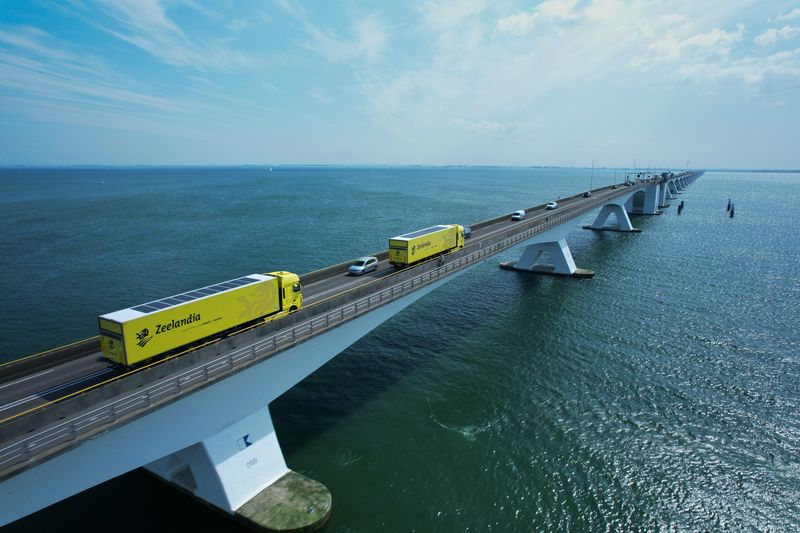
:quality(80)/p7i.vogel.de/wcms/e1/5a/e15ad21557f226c12024a8c82377a608/trucks-with-vipv-on-bridgev1.jpeg "In particular, delivery vans, trucks, and trailers have large roof areas and consume a lot of energy for cooling, heating, and auxiliary units. Integrated solar panels are a sensible solution. (Source: IM Efficiency)")
:quality(80)/p7i.vogel.de/wcms/e3/c6/e3c68f83504c098804f49c6c0ab68afa/trucks-with-vipv-on-bridge-5472x3076v1.jpeg "Insbesondere Lieferwagen, Lkw und Anhänger verfügen über viel Dachfläche und verbrauchen gleichzeitig viel Energie für Kühlung, Heizung und Hilfsaggregate. Integrierte Solarmodule sind sinnvolle Lösung. (Bild: IM Efficiency)")
:quality(80)/p7i.vogel.de/wcms/a0/03/a003d1d5ee83399f232303f7c50bd93b/geralt-statistics-4623842-4752x2672v1.jpeg "Erholung mit Risiken: Deutschlands Wirtschaft zwischen geopolitischer Unsicherheit und technologischem Aufschwung. (Bild: )")
:quality(80)/p7i.vogel.de/wcms/68/89/6889ce824f7362d1ee31c6114039849d/0131677915v2.jpeg "Nur menschliche Empathie schafft echte Beziehungen. Führungskräfte, die Hoffnung vermitteln und Vertrauen im Alltag leben, verwandeln Risiken automatisierter Entscheidungen in Chancen, die Organisation und Mitarbeitende gleichermaßen stärken. (Bild: © Md - stock.adobe.com)")
:quality(80)/p7i.vogel.de/wcms/ed/02/ed02ce464ed1a39dcd7a617f55a4ffc1/0131677386v2.jpeg "Durch das Nutzen von KI gewinnen Führungskräfte Zeit für Entwicklungsgespräche, Perspektivenarbeit und persönliche Begleitung. Diese menschliche und persönliche Zuwendung signalisiert Mitarbeitern Wertschätzung und eröffnet Zukunftschancen. (Bild: © Md - stock.adobe.com)")
:quality(80)/p7i.vogel.de/wcms/7d/df/7ddf9467a9acc812e8cc29324c3b080e/0131729703v2.jpeg "Zu viele verschiedene Varianten machen das Handling unübersichtlich. Denn ein geändertes Bauteil betrifft nicht nur eine Stückliste, sondern zieht Anpassungen in Prüfplänen, Dokumentation, Parametrierung und Ersatzteillogik nach sich. (Bild: © Radoman Durkovic - stock.adobe.com)")
:quality(80)/p7i.vogel.de/wcms/6c/66/6c6647dd81976d2c940f9514ec01f02a/schraub-20tec-074-3000x1687v1.jpeg "Der fachliche Austausch ist das, was die Regionalmesse Schraubtec ausmacht. (Bild: PHOTOVISION-DH )")
:quality(80)/p7i.vogel.de/wcms/58/63/586379bda19d8f06e6015cecb41a4967/kampagnenbild-1947x1095v1.png "(Bild: ANSYS Germany GmbH )")
:quality(80)/p7i.vogel.de/wcms/d1/12/d112dfa6e7df4c7af715a4833483f659/0126977441v1.jpeg "DIN RAIL SMART PROTECTION: RACPRO1 E-FUSE MODULE (Bild: RECOM Power GmbH)")
:fill(fff,0)/images.vogel.de/vogelonline/companyimg/113800/113818/65.jpg "Turck_Your_Global_Automation_Partner.jpg ()")
:fill(fff,0)/images.vogel.de/vogelonline/companyimg/69500/69582/65.jpg "mc_logo_600dpi.jpg ()")
:quality(80)/p7i.vogel.de/wcms/a6/77/a6772fdb0a569e2c63e6a53c71b963f5/car-with-vipv-webv1.jpeg "Cars could generate up to 55 percent of their energy needs in Central Europe themselves; in Southern Europe, it could be up to 80 percent.(Source: Lightyear)")
:quality(80)/p7i.vogel.de/wcms/c0/b6/c0b6728aa041b76bf6620342c475b0cb/van-with-vipv-webv1.jpeg "Delivery van with vehicle-integrated photovoltaics, which was part of the study fleet. Like all other vehicles, it is equipped with a sensor to collect irradiation data.(Source: IM Efficiency)")
Stand: 08.12.2025
Es ist für uns eine Selbstverständlichkeit, dass wir verantwortungsvoll mit Ihren personenbezogenen Daten umgehen. Sofern wir personenbezogene Daten von Ihnen erheben, verarbeiten wir diese unter Beachtung der geltenden Datenschutzvorschriften. Detaillierte Informationen finden Sie in unserer Datenschutzerklärung.
Einwilligung in die Verwendung von Daten zu Werbezwecken
Ich bin damit einverstanden, dass die Vogel Communications Group GmbH & Co. KG, Max-Planckstr. 7-9, 97082 Würzburg einschließlich aller mit ihr im Sinne der §§ 15 ff. AktG verbundenen Unternehmen (im weiteren: Vogel Communications Group) meine E-Mail-Adresse für die Zusendung von redaktionellen Newslettern nutzt. Auflistungen der jeweils zugehörigen Unternehmen können hier abgerufen werden.
Der Newsletterinhalt erstreckt sich dabei auf Produkte und Dienstleistungen aller zuvor genannten Unternehmen, darunter beispielsweise Fachzeitschriften und Fachbücher, Veranstaltungen und Messen sowie veranstaltungsbezogene Produkte und Dienstleistungen, Print- und Digital-Mediaangebote und Services wie weitere (redaktionelle) Newsletter, Gewinnspiele, Lead-Kampagnen, Marktforschung im Online- und Offline-Bereich, fachspezifische Webportale und E-Learning-Angebote. Wenn auch meine persönliche Telefonnummer erhoben wurde, darf diese für die Unterbreitung von Angeboten der vorgenannten Produkte und Dienstleistungen der vorgenannten Unternehmen und Marktforschung genutzt werden.
Meine Einwilligung umfasst zudem die Verarbeitung meiner E-Mail-Adresse und Telefonnummer für den Datenabgleich zu Marketingzwecken mit ausgewählten Werbepartnern wie z.B. LinkedIN, Google und Meta. Hierfür darf die Vogel Communications Group die genannten Daten gehasht an Werbepartner übermitteln, die diese Daten dann nutzen, um feststellen zu können, ob ich ebenfalls Mitglied auf den besagten Werbepartnerportalen bin. Die Vogel Communications Group nutzt diese Funktion zu Zwecken des Retargeting (Upselling, Crossselling und Kundenbindung), der Generierung von sog. Lookalike Audiences zur Neukundengewinnung und als Ausschlussgrundlage für laufende Werbekampagnen. Weitere Informationen kann ich dem Abschnitt „Datenabgleich zu Marketingzwecken“ in der Datenschutzerklärung entnehmen.
Falls ich im Internet auf Portalen der Vogel Communications Group einschließlich deren mit ihr im Sinne der §§ 15 ff. AktG verbundenen Unternehmen geschützte Inhalte abrufe, muss ich mich mit weiteren Daten für den Zugang zu diesen Inhalten registrieren. Im Gegenzug für diesen gebührenlosen Zugang zu redaktionellen Inhalten dürfen meine Daten im Sinne dieser Einwilligung für die hier genannten Zwecke verwendet werden. Dies gilt nicht für den Datenabgleich zu Marketingzwecken.
Recht auf Widerruf
Mir ist bewusst, dass ich diese Einwilligung jederzeit für die Zukunft widerrufen kann. Durch meinen Widerruf wird die Rechtmäßigkeit der aufgrund meiner Einwilligung bis zum Widerruf erfolgten Verarbeitung nicht berührt. Um meinen Widerruf zu erklären, kann ich als eine Möglichkeit das unter https://contact.vogel.de abrufbare Kontaktformular nutzen. Sofern ich einzelne von mir abonnierte Newsletter nicht mehr erhalten möchte, kann ich darüber hinaus auch den am Ende eines Newsletters eingebundenen Abmeldelink anklicken. Weitere Informationen zu meinem Widerrufsrecht und dessen Ausübung sowie zu den Folgen meines Widerrufs finde ich in der Datenschutzerklärung, Abschnitt Redaktionelle Newsletter.
:quality(80)/p7i.vogel.de/wcms/e3/c6/e3c68f83504c098804f49c6c0ab68afa/trucks-with-vipv-on-bridge-5472x3076v1.jpeg "Insbesondere Lieferwagen, Lkw und Anhänger verfügen über viel Dachfläche und verbrauchen gleichzeitig viel Energie für Kühlung, Heizung und Hilfsaggregate. Integrierte Solarmodule sind sinnvolle Lösung. (Bild: IM Efficiency)")
:quality(80)/p7i.vogel.de/wcms/e4/10/e410487e2c5d0b15ebfc0a7744afa090/0126079631v2.jpeg "Der nRF9160 von Nordic ist ein stromsparender mobilfunkbasierter IoT-SiP, der sich ideal für Smart-Grid-Anwendungen eignet. (Bild: Nordic Semiconductor )")